



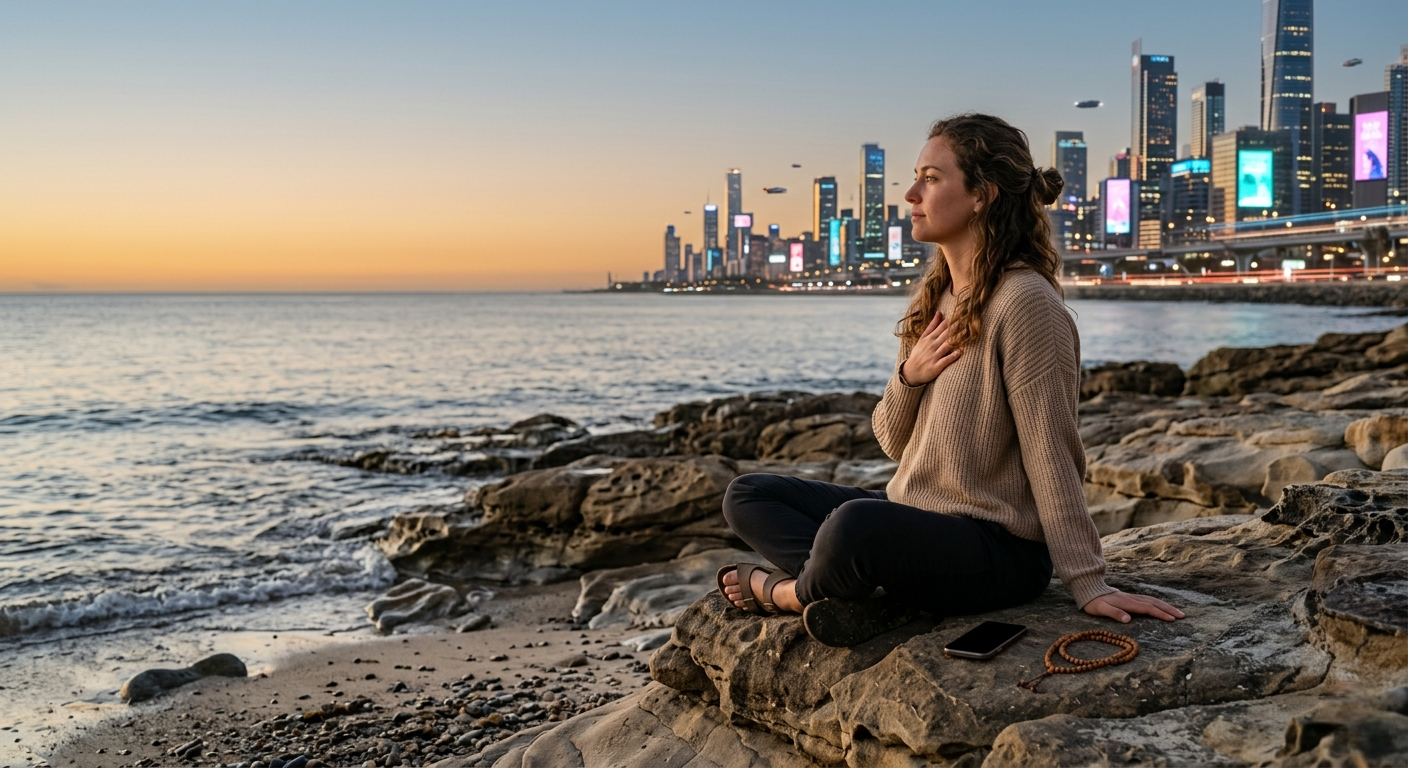
The notifications never stop. It is 2026, and our lives are governed by an invisible, humming infrastructure of algorithms, updates, and feeds. We wake up to breaking news, work through an avalanche of instant messages, and fall asleep to the hypnotic scroll of social media. We are more connected than we have ever been in human history, yet we are profoundly disconnected from our own bodies, our minds, and each other.
This is the reality of the digital burnout epidemic. We are running an ancient biological operating system on hyper-fast, modern software, and the system is crashing.
To survive this era without losing our minds, we don’t need more productivity apps or biohacking gadgets. We need to look backward. By blending the psychological armor of Hellenistic philosophy with the physiological mastery of Eastern traditions, we can find a timeless blueprint to heal modern anxiety and reclaim our peace in a fast-paced world.
The Digital Burnout Epidemic
The 2026 Hyper-Connected Landscape and the Flight-or-Fight Trap
Our ancestors evolved to use the fight-or-flight response for acute, life-threatening dangers. A rustle in the bushes meant a predator; the sympathetic nervous system flooded the body with cortisol and adrenaline, prepping it to fight or flee. Once the threat passed, the body returned to baseline.
In 2026, the rustle in the bushes has been replaced by the ping of a smartphone. The contemporary landscape doesn’t feature apex predators, but it does feature a relentless stream of micro-stressors: an urgent email from a manager, a dip in the stock market, a text message left on “read,” or a headline about global instability. Because our brains cannot inherently distinguish between a physical threat and a digital stressor, we live in a state of constant, low-grade biological panic. Our hearts beat faster, our breathing shallows, and our cortisol levels remain chronically elevated. We are trapped in a perpetual survival mode that was never meant to be sustained.
The Psychological Cost of the Career Jungle Gym
Compounding this digital fatigue is the shifting nature of work. The traditional career ladder has collapsed into a chaotic “career jungle gym.” Professionals are told they must constantly upskill, pivot, build a personal brand, and optimize every hour of their day to remain relevant.
This creates an exhausting illusion of perpetual progress. We chase milestones—a title change, a salary bump, a higher follower count—under the assumption that tranquility lies just on the other side of the next achievement. But the horizon keeps moving. This frantic race breeds a deep-seated psychological restlessness, a feeling of “never doing enough” or “falling behind.” We have commodified our time and our identities, leaving very little room for our souls to breathe.
The Biological Need for Rhythmic Stillness
Human beings are rhythmic creatures. Our bodies are governed by circadian rhythms, cardiac cycles, and respiratory patterns. Nature moves in cycles of activity and rest, expansion and contraction, summer and winter.
Modern life, however, demands a flat line of continuous, peak productivity. We expect ourselves to operate at 100% efficiency every day of the year, completely ignoring our biological need for rhythmic stillness. When we strip away the natural pauses from our lives—the quiet mornings, the long walks without headphones, the moments of looking out a window doing absolutely nothing—we create a deep internal dissonance. The restlessness we feel is our biology screaming for a pause, a return to the natural cadence of life.
The Stoic Anchor in a Chaotic World
When the external world becomes a hurricane of uncontrollable variables, we need an internal anchor to manage modern anxiety. This is where the psychological strategies found in Roman and Greek Stoicism become invaluable. Stoicism is not about suppressing emotion; it is about cultivating an unshakeable clarity of mind.
The Dichotomy of Control: Filtering the Digital Noise
At the very core of Stoic philosophy lies the Dichotomy of Control, most famously clarified by Epictetus. He asserted that some things are up to us, while others are not.
In our current context, our thoughts, our intentions, and our responses to digital inputs are within our control. The algorithmic feeds, global economic shifts, corporate restructuring, and opinions of strangers on the internet are completely outside our control.
When we experience psychological overwhelm, it is almost always because we are investing our emotional energy into things outside our control. By ruthlessly filtering out global noise through this lens, we can look at a chaotic news feed or a demanding inbox and say, “The data before me is outside my control. My response to it is entirely within my power.” This single mental shift instantly defuses digital overwhelm.
Premeditatio Malorum: Grounding Economic and Career Fears
Another powerful, counterintuitive Stoic tool is Premeditatio Malorum—the premeditation of evils. Much of our modern anxiety thrives on vague, catastrophic “what-ifs.” We worry about losing our jobs, failing a project, or facing an economic downturn, allowing these ambiguous terrors to haunt our subconscious.
The Stoics faced these fears head-on by consciously imagining the worst-case scenarios in vivid detail. By visualizing the loss of your job or an economic setback, you strip the fear of its power. You realize that even in the worst-case scenario, you possess the resilience to adapt, figure out a solution, and survive. This practice grounds your vague worries in reality, transforming paralyzing panic into actionable contingency plans.
Transitioning from the Mind to the Body
Yet, mental frameworks can only take us so far. Anyone who has ever experienced a full-blown panic response knows that you cannot simply “think” your way out of a physiological spike. When your heart is racing and your chest is tight, philosophy needs a physical ally. To truly conquer modern anxiety, we must transition from mental filtering to the physical regulation of the nervous system.
Vedantic Breath as a Biological Reset
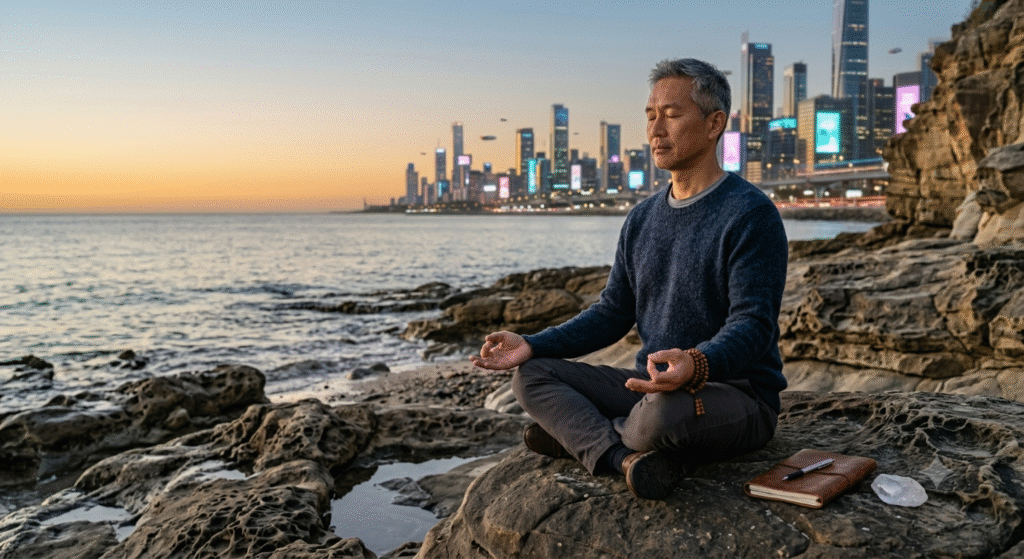
Long before modern scientists mapped the human nervous system, the sages of Ancient India understood that the mind and the body are connected by a single, powerful bridge: the breath. In the Vedic tradition, the breath is not just oxygen exchange; it is the vehicle for Prana, the vital life force. To calm a frantic mind, you must first calm a frantic body.
Ancient Prana Techniques for a Slowed Pulse
The practice of Pranayama (breath control) offers immediate, practical tools to shift the body out of its frantic fight-or-flight state. One of the most effective techniques for relieving modern anxiety is Nadi Shodhana (Alternate Nostril Breathing), alongside elongated exhalations.
When we are stressed, our breathing becomes shallow and rapid, keeping our sympathetic nervous system engaged. By intentionally slowing down the breath—specifically making the exhalation twice as long as the inhalation (such as inhaling for 4 seconds and exhaling for 8 seconds)—we send an unambiguous signal to the brain that we are safe.
The Bridge Between Sanskrit Wisdom and Modern Neuroscience
What the ancient Vedic texts described as balancing Ida and Pingala (the cooling and heating energy channels in the body), modern neuroscience explains through the lens of the vagus nerve.
The vagus nerve is the main component of the parasympathetic nervous system, responsible for the “rest and digest” response. It runs from the brainstem all the way down into the abdomen, passing through the heart and lungs. When you practice deep, diaphragmatic breathing with extended exhalations, you stimulate the vagus nerve.
This stimulation triggers the release of acetylcholine, a neurotransmitter that acts as a natural brake for your heart rate, lowers blood pressure, and signals the brain to dial down the production of stress hormones. The ancient yogis discovered through direct experience that mastering the breath meant mastering internal panic.
Changing the Internal to Changing the External
Regulating your nervous system with breathwork gives you an immediate biological reset. However, if you step right back into the same toxic, over-stimulating environment without changing your physical inputs, the symptoms will inevitably return. True, lasting peace requires us to shift our focus from internal regulation to an intentional environmental change.
Swapping the Screen for the Shore
Our ancestors did not live their lives staring at glowing rectangles in windowless rooms. They lived in intimate conversation with the natural world. To heal from digital burnout, we must actively practice swapping our digital devices for natural spaces.
Blue Light vs. Natural Horizons
The frantic, artificial blue light emitted by our smartphones and computer screens keeps our brains in a perpetual state of daytime alertness, disrupting our melatonin production and fracturing our attention spans. This constant visual restriction—focusing on a small box just inches from our faces—physically mirrors the tunnel vision that occurs during a stress response.
Contrast this with the expansive, grounding power of a natural horizon. When you step outside and look at the ocean, a mountain range, or even a line of trees in a park, your eyes engage in what psychologists call “panoramic vision.” Looking at a wide, distant horizon automatically calms the amygdala, dropping the body’s threat-detection levels and alleviating modern anxiety. Nature provides a profound sensory relief that no digital wallpaper can mimic.
Breaking Digital Rumination through Physical Presence
Stress is almost always a disease of the past or the future. We ruminate over past mistakes or stress over future deadlines. The digital world feeds this because it is entirely abstract and disembodied.
Nature forces us back into the absolute reality of the present moment. The chill of a coastal breeze, the texture of sand or soil beneath our feet, the rhythmic crash of waves, or the rustle of leaves—these sensory inputs demand our immediate physical presence. By engaging all five senses in the natural world, we break the cognitive loop of digital rumination. We remember that we are flesh-and-blood creatures inhabiting a physical planet, not just disembodied minds living inside a digital network.
Redefining Your Timeline: Corporate Urgency vs. Natural Cycles
The corporate world operates on an artificial timeline of quarters, sprints, deadlines, and instantaneous replies. It teaches us that everything is an emergency and that growth must be exponential and unceasing. This artificial urgency is a primary driver of modern anxiety.
Nature teaches a completely different lesson. A forest does not grow in a quarterly sprint. An ocean tide cannot be hurried by an email. When we spend time observing natural cycles—the slow changing of seasons, the waxing and waning of the moon, the steady rise and fall of the tides—we are reminded of a slower, truer timeline.
“Nature does not hurry, yet everything is accomplished.” — Lao Tzu
By aligning ourselves with this timeless perspective, we can step off the treadmill of corporate urgency. We realize that our lives, too, have seasons of output and seasons of rest, and that true peace lies in honoring those natural rhythms.
Integrating Ancient Wisdom into a Modern Schedule
To experience the benefits of these ancient practices, you do not need to quit your job, delete all your accounts, and move to a remote monastery. You simply need to build small, sacred rituals into your daily routine.
| Dimension | Daily Practice | Core Benefit |
| The Stoic Anchor | Morning journaling using the Dichotomy of Control to filter your daily tasks. | Saves mental energy by eliminating worries over things you cannot change. |
| The Vedantic Breath | Five minutes of Nadi Shodhana or 4-8 breathing before checking your phone. | Stimulates the vagus nerve to prevent morning cortisol spikes. |
| The Natural Return | A daily tech-free walk, focusing your eyes on the furthest possible horizon. | Breaks digital rumination and resets your nervous system. |
By consciously weaving these ancient practices into our modern lives, we protect our minds from the chaos of the digital age. The world in 2026 will likely continue to accelerate, but our internal worlds don’t have to. We can choose to anchor ourselves in truths that have stood the test of millennia, minimizing modern anxiety and finding absolute peace in a fast-paced world.