



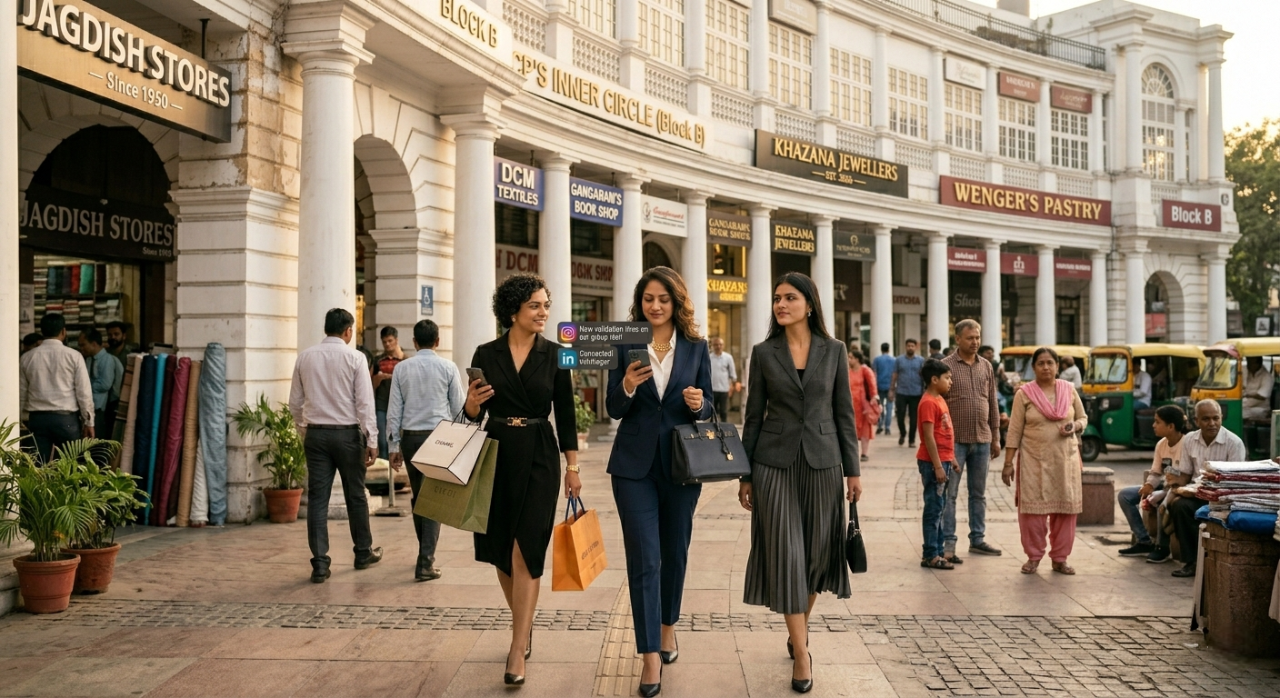
Walk into any premium co-working space in Gurgaon or a high-end cafe in Indiranagar, and you will see it: the uniform of success. Latest-generation tablets, designer athleisure, and the subtle glow of premium wearable tech. But look closer at the balance sheets of these modern professionals, and a different story emerges. We are currently witnessing a massive surge in future validation spending—the act of purchasing luxury or lifestyle markers today to “validate” the successful person we hope to become tomorrow.
1. The Psychology of the "Next-Level" Self
In 2026, the Indian middle class is no longer just “aspirational”; it is “anticipatory.” We are taught that to get the job, we must look like we already have it. To enter the inner circle, we must own the accessories of that circle.
This leads to a dangerous financial habit: future validation spending. We aren’t buying a car because we need to get from point A to B; we are buying a specific brand because it validates our entry into a higher social bracket. The “cost of living” has ballooned because it now includes the “cost of appearing successful.”
2. Digital Architecture and the Validation Loop
Social media in 2026 isn’t just a place to share photos; it is a digital ledger of our achievements. The pressure to maintain a “grid” that signals upward mobility is immense.
Every vacation, every dining experience, and even the books on our shelves are curated to provide proof of a life well-lived. This constant need for digital proof fuels future validation spending. We spend money on experiences not for the joy they bring in the moment, but for the validation they will provide once they are uploaded and archived.
3. The "EMIfication" of the Indian Dream
A decade ago, debt was a four-letter word in most Indian households. Today, “Buy Now, Pay Later” (BNPL) and easy EMIs have made future validation spending accessible to everyone.
You can now buy a ₹1,20,000 smartphone on an EMI that costs less than your monthly grocery bill. This has decoupled the act of spending from the reality of earning. We are borrowing from our future selves to pay for a version of “validation” that we haven’t yet earned through actual wealth creation.
4. Professional Validation: The Certification Trap
Validation isn’t just about luxury goods; it’s also about intellectual signaling. In 2026, the fear of AI-driven job loss has triggered a frenzy of “up-skilling.” While education is vital, much of it has turned into future validation spending.
Professionals are collecting expensive digital badges and executive certifications like trophies. Often, these aren’t chosen for the knowledge they provide, but for the LinkedIn “congratulations” they trigger. We are paying a high price to prove to the market that we are still relevant, even when the ROI on these courses remains questionable.
5. The Real Estate of the Ego
In cities like Hyderabad and Pune, the “premium township” culture is at its peak. Living in a gated community with a golf course and a clubhouse isn’t just about safety; it’s a form of future validation spending.
Young couples are stretching their home loans to the breaking point to live in pin codes that signal “arrival.” They are paying a premium for a lifestyle that they are often too busy working to actually enjoy. The clubhouse is empty, but the address is validated.

6. The Loneliness of the High-Spender
There is a hidden emotional cost to future validation spending. When your lifestyle is built on “validation” rather than “value,” it creates a fragile sense of self.
If the “likes” stop, or if a peer buys a newer model, the validation evaporates. This leads to a “Hedonic Treadmill” where the cost of living keeps rising, but the level of satisfaction remains stagnant. We are working harder than ever to fund a version of ourselves that we don’t even like when we are alone.
Breaking the Cycle: Value vs. Validation
How do we differentiate between a legitimate life upgrade and future validation spending? It requires a shift in mindset from external signaling to internal utility.
The “Silent Wealth” Movement
A counter-culture is beginning to brew in India’s metro cities. “Silent Wealth” is the practice of spending on things that improve your life behind closed doors—quality sleep, physical health, and financial freedom—without the need for public acknowledgment.
By reducing future validation spending, individuals are finding they can actually afford a much higher “quality of life” with much less “cost of living.”
7. The Impact of Influencer Culture in 2026
The influencers of today are more sophisticated than those of the past. They don’t just sell products; they sell “lifestyles of the future.” When an influencer showcases a “day in the life” that involves a specific skincare routine and a high-end gym membership, they are setting the baseline for what validation looks like.
For the viewer, hitting “buy” on those products feels like a shortcut to that lifestyle. This is the engine of future validation spending. We are buying the props of a movie we aren’t actually starring in.
8. Financial Freedom vs. Social Proof
The greatest cost of future validation spending is the loss of “Optionality.” Optionality is the ability to quit a job you hate, start a business, or take a sabbatical.
When your income is tied up in EMIs for things you bought to impress people you don’t like, you lose your freedom. You become a prisoner to your own lifestyle. In 2026, true status isn’t owning the latest car; it’s owning your time.
9. Reclaiming the Narrative
To combat the urge for future validation spending, we must ask three critical questions before any major purchase:
Would I still buy this if I could never tell anyone about it?
Does this solve a problem, or does it just create a “look”?
Is the “Future Me” going to thank the “Current Me” for this debt?
If the answer to the first is “No,” or the last is “No,” you are likely engaged in future validation spending.
The Price of Peace
The cost of living for future validation is far higher than the price tag on the receipt. It costs us our sleep, our creative risks, and our long-term security.
In a world that is constantly trying to sell us a “better version” of ourselves, the most radical act is to be content with who we are—and what we have—right now. By cutting out future validation spending, we don’t just save money; we save ourselves from the exhaustion of a performance that never ends.
India’s growth story is incredible, but it shouldn’t come at the cost of our individual financial sanity. As we move further into 2026, let’s redefine what “making it” looks like. Let it be about the depth of our savings, the health of our bodies, and the peace in our homes—not the validation on our screens.
When we stop paying for the “Future Version” of us, we finally have enough resources to enjoy the “Current Version” of us. And that is the only validation that truly matters.