



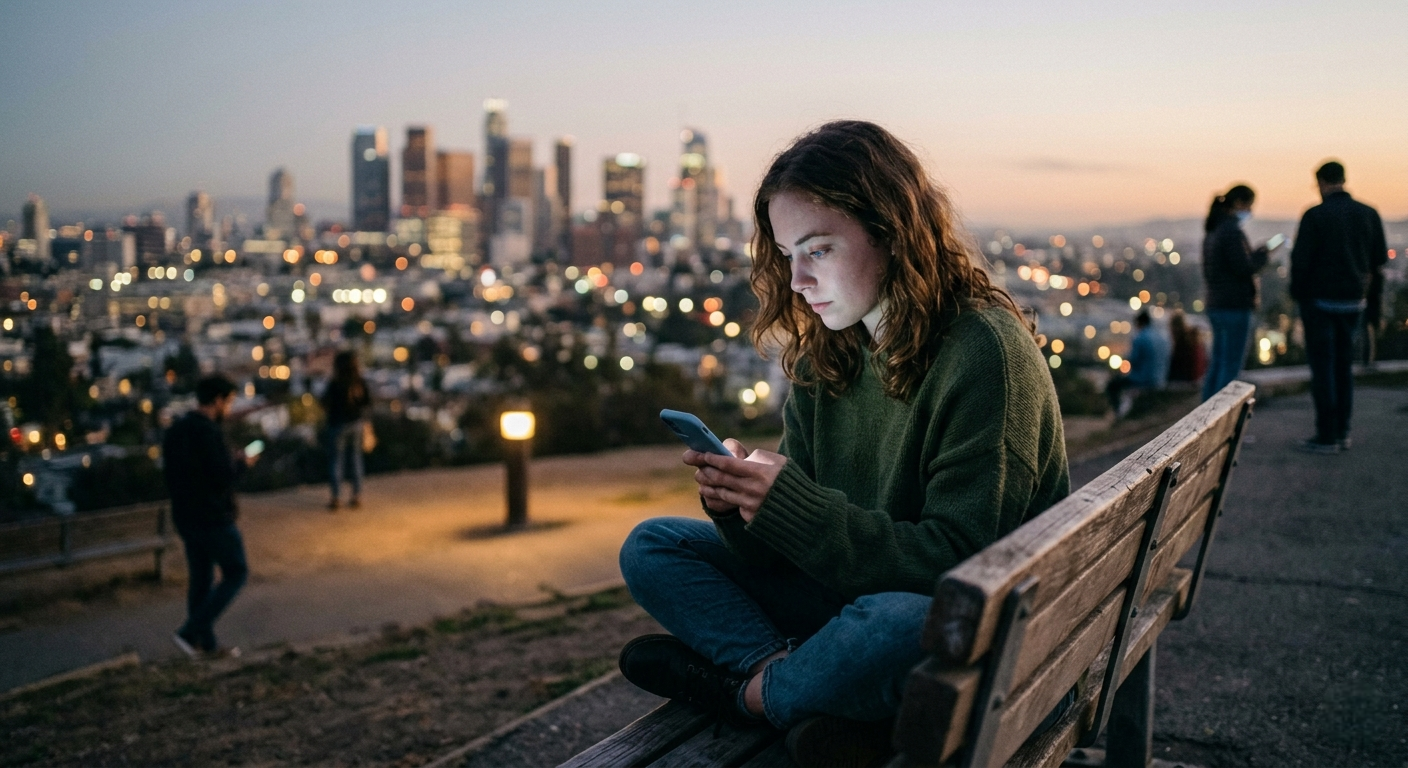
Have you ever scrolled through your social media feeds, surrounded by thousands of virtual “friends” and followers, only to feel a profound, hollow sense of isolation? You aren’t alone. We are currently living through the most connected era in human history, yet global health organizations are warning of a catastrophic, silent epidemic.
By every logical metric, our smartphones and digital profiles should make us feel socially fulfilled. We can instantly message someone across the globe, stream our lives to the public, and peek into the daily updates of everyone we’ve ever met. Yet, study after study shows that anxiety and isolation are skyrocketing.
This brings us to a painful reality: digital loneliness is actively reshaping human psychology. We aren’t suffering from a lack of connection; we are suffering from a lack of substance. To understand why this happens, we must look beneath the sleek interfaces of our favorite apps and explore why digital loneliness thrives in a hyper-connected world.
1. The Dopamine Trap: Substituting Validation for Intimacy
Human beings are evolutionarily hardwired for deep social bonding. For millions of years, being part of a tribe meant physical survival. Our brains developed a complex neurochemical reward system to encourage real human interaction, primarily utilizing dopamine and oxytocin.
Modern apps are meticulously engineered to hijack this exact system. When you post a photo or share an update, you trigger a microscopic hit of dopamine—the brain’s reward chemical. Every like, share, and comment feels like social validation. It triggers an addictive rush that makes you want to return to the platform again and again.
However, dopamine is the hormone of anticipation, not satisfaction. It keeps you looping and scrolling for more, but it completely lacks oxytocin—the hormone of deep trust, safety, and long-term bonding. Oxytocin is generated through eye contact, shared physical spaces, synchronized breathing, and physical presence.
By constantly substituting quick dopamine validation for genuine oxytocin intimacy, we enter a state of chronic digital loneliness. We are filling our emotional stomachs with empty digital calories, wondering why we are still starved for real human nourishment. The brain registers the attention, but the soul remains entirely hungry.
2. Quantitative Friendship: Metrics Over Meaning
Before the internet, friendship was qualitative. A friend was someone you shared meals with, someone you called during a crisis, or someone who helped you move your house. Today, social platforms have transformed friendship into a set of quantitative metrics:
Follower counts
Subscriber milestones
Direct message “streaks”
View and engagement counts
When human relationships become a numbers game, the emotional value of the connection plummets. We begin to view our networks not as circles of mutual support, but as an audience to be managed. This shifts our mindset from collaboration to presentation.
Managing an audience requires a performance. You cannot easily show an audience your raw, unfiltered vulnerabilities; instead, you curate an optimized highlight reel. Psychologists call this the “Performative Self.” Because you are only putting a polished avatar of yourself online, any praise or attention you receive is directed at the performance, not at you.
Consequently, even if a post gets hundreds of likes, your subconscious recognizes that the attention belongs to the avatar, not the flawed, real human sitting alone in the dark. This emotional disconnect directly fuels the rise of digital loneliness, leaving the person behind the screen feeling completely invisible despite their viral metrics.
3. The Illusion of Proximity: Passive Lurking vs. Active Bonding
There is a massive behavioral difference between active communication and passive consumption, yet our brains easily confuse the two when using apps.
Consider the act of “infinite scrolling.” You spend hours looking at a high school classmate’s vacation photos, a coworker’s new pet, or an influencer’s daily routine. Because you consume so much visual data about their lives, your brain registers a false sense of familiarity. You feel like you know what they are up to, creating an illusion of proximity.
Passive Consumption (Lurking) ──> False Familiarity ──> Lack of Real Interaction ──> Deepened Isolation
But this is a one-way street. You haven’t actually interacted with them. No words were exchanged, no vulnerability was shared, and no emotional investment was made. Psychologists refer to this behavior as passive lurking. It gives us the comforting sensation of being part of a community without requiring any of the actual emotional work.
When you mistake knowing about someone for actually knowing them, you stop making the real-world effort to text, call, or meet up. Why bother calling a friend when you’ve already watched their entire weekend play out on an Instagram story? This digital complacency turns our social circles into groups of passive observers, driving a wedge deeper into communities and accelerating digital loneliness.

4. The Upward Comparison Loop and Cultural Dysmorphia
We cannot discuss the modern online landscape without addressing the psychological toll of social comparison. Humans naturally evaluate their own worth by comparing themselves to others. In the past, you compared your life to your immediate neighbors or colleagues, ensuring a relatively level playing field.
Today, you are comparing your messy, unedited, behind-the-scenes life with the highly curated, heavily filtered highlight reels of the top 1% of the global population.
| Aspect of Life | Real-World Reality | Social Media Curation |
| Daily Routine | Errands, chores, fatigue, ordinary moments | High-energy activities, aesthetic spaces, peak excitement |
| Relationships | Routine maintenance, compromises, quiet comfort | Perfect milestones, grand gestures, highly photogenic dates |
| Appearance | Natural variations, casual clothing, aging | Professional lighting, optimal angles, digital smoothing |
When you are constantly bombarded by images of people who appear wealthier, more attractive, and happier than you, a deep sense of inadequacy sets in. This constant exposure breeds envy and shame. We begin to look at our ordinary lives with resentment. Because shame causes people to withdraw socially, users retreat further into their digital shells, exacerbating the vicious cycle of digital loneliness. We isolate ourselves because we feel our true lives don’t measure up to the idealized standards on our screens.
5. Algorithmic Polarization: Setting Communities Against Each Other
Beyond personal psychology, the very architecture of the internet plays a role in driving us apart. The primary business goal of any major platform is to maximize user retention and watch time. The longer you stay on an app, the more ads you see, and the more revenue the platform generates.
Through years of optimization, algorithms discovered that the absolute best way to keep a human being glued to a screen is to trigger high-arousal negative emotions, specifically moral outrage, fear, and division. As a result, our social feeds are meticulously customized to confirm our existing biases and vilify outside groups.
This constant algorithmic fracturing has systematically destroyed our sense of a shared social reality. When we step offline and interact with people in our actual geographic communities, we no longer see neighbors; we see adversaries who hold different algorithmic worldviews. By eroding social trust on a local level, the digital landscape makes physical spaces feel increasingly hostile, fragmented, and alien. When real-world interactions feel tense or unsafe, people naturally retreat back into the safety of isolation, further worsening the systemic spread of digital loneliness.
6. Reclaiming Authentic Connection in a Screen-First World
Acknowledging the flaws of our digital habits doesn’t mean we have to delete every app, discard our smartphones, or live as hermits. The internet remains an incredible tool for logistics, global information, and basic communication. However, to cure chronic isolation, we must transition from using technology as an emotional crutch to using it strictly as a bridge to the physical world.
Here are three actionable, evidence-based ways to protect your mental health:
Shift to High-Friction Communication
Texting and commenting are low-friction interactions that require minimal emotional effort and yield minimal psychological reward. Move your habits toward high-friction communication: pick up the phone, make a video call, or arrange a face-to-face meet-up. The human voice, vocal inflections, and facial expressions carry the rich emotional nuances your brain needs to feel secure and truly seen.
Establish Explicit Tech-Free Sanctuaries
Protect your biological needs by creating physical spaces where screens are forbidden. Make your dinner table, your bedroom, or the first 30 minutes of your morning entirely tech-free. Use this reclaimed time to cultivate present-moment awareness, chat with family members without distraction, or simply let your mind rest without the constant stimulation of algorithmic feeds.
Pivot From Consumption to Community
Instead of passively scrolling through the lives of strangers, use digital tools intentionally to find real-world tribes. Use local platforms to find running clubs, volunteer organizations, book clubs, or amateur sports leagues. True belonging is built through shared physical activity, common goals, and consistent, repeated exposure over time.
Looking Up From the Feed
The screen will never love you back. It can provide endless entertainment, convenience, and a fleeting sense of visibility, but it can never replicate the grounding safety of a tangible human community.
Overcoming digital loneliness requires us to take our emotional power back from the corporations that profit off our attention. By recognizing the structural limitations of digital intimacy and intentionally investing in real-world, high-quality relationships, we can dismantle this modern paradox. It is time to look up from our feeds, look into each other’s eyes, and rebuild the authentic connections we were always evolved to have.